
Service
Sports Injury Physiotherapy
Assessment and staged rehabilitation for sprains, strains and tendon problems — through to proper return-to-sport testing, not just pain relief.
Separate arrangements for male and female patients
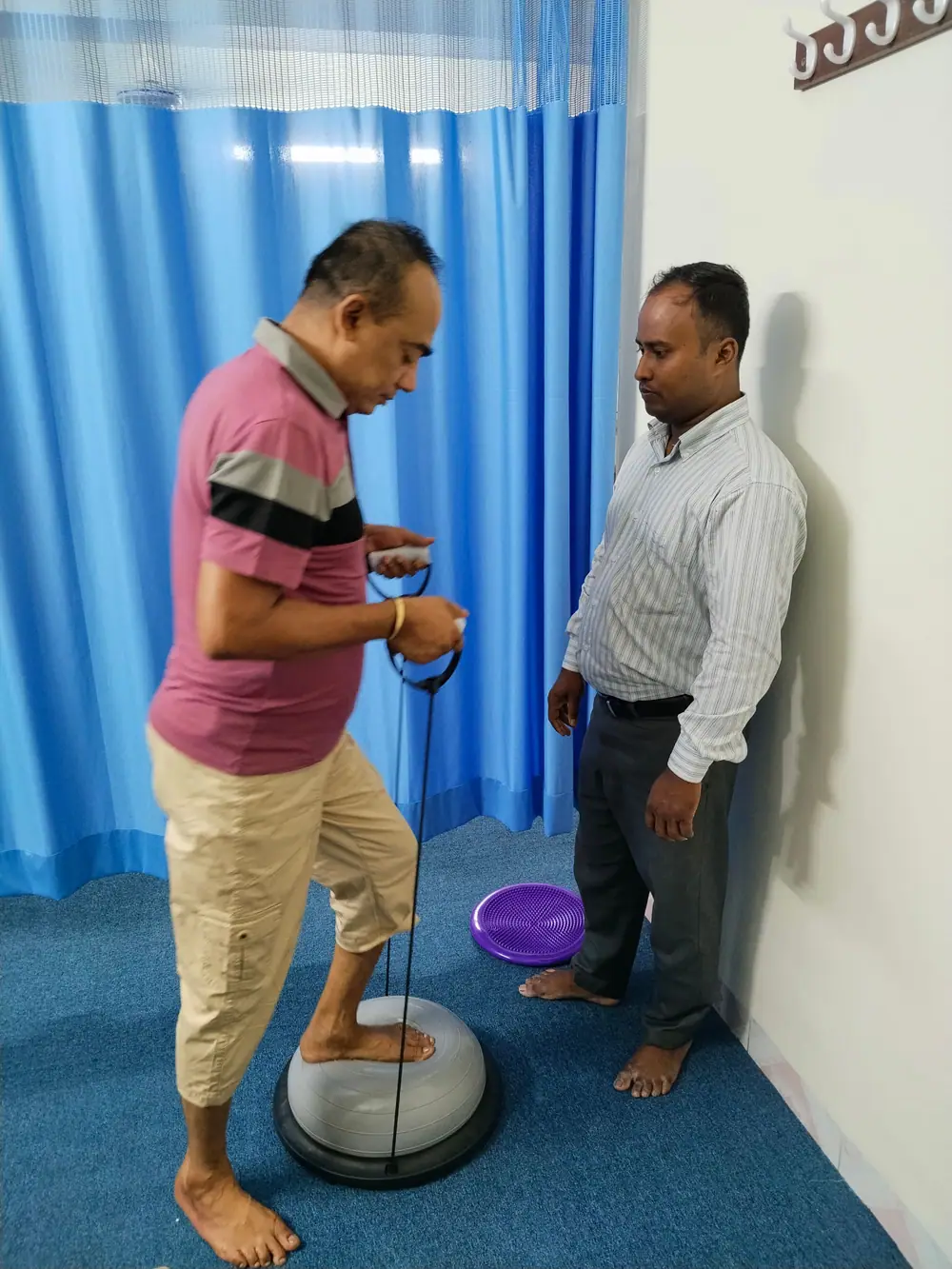
The mistake that turns a manageable sports injury into a recurring one is returning to play as soon as the pain stops. Pain usually settles well before the tissue has regained its strength and the joint has regained its control. That gap is where re-injuries happen, and it is the gap sports rehabilitation is designed to close.
Physio Motion treats sports injuries in recreational and competitive athletes — cricket, football, badminton, running and gym training — from the acute stage through to a graded return to full activity.
Injuries commonly treated
- Ankle sprains, including recurrent instability after inadequate first-time rehabilitation.
- Knee ligament and meniscus injuries, both conservatively managed and post-operative.
- Hamstring, calf, quadriceps and groin strains.
- Shoulder injuries — rotator cuff problems, instability and throwing-related pain.
- Tendon problems including tennis elbow, golfer’s elbow, Achilles and patellar tendinopathy.
- Shin pain, stress-related bone pain and overuse injuries from running.
- Lower back pain related to training load or technique.
The four stages of sports rehabilitation
- Settle the acute stage — protect the injured tissue, control swelling, and restore comfortable range of motion. Complete immobilisation is avoided unless it is specifically indicated.
- Rebuild strength — progressive loading of the injured tissue and everything supporting it. This is the stage most self-managed injuries skip, and the main reason they recur.
- Restore control and power — balance, landing mechanics, change of direction and sport-specific movement patterns at increasing speed.
- Return to sport testing — objective comparison against the uninjured side, and graded reintroduction to training before full competition.
Why load management matters more than rest
Tendon and muscle problems in particular respond to correctly dosed loading, not to complete rest. Tendons that are rested entirely tend to become less tolerant of load, so returning to sport reproduces the pain immediately. The skill is finding the level of loading that stimulates adaptation without provoking a flare — which changes week to week as you improve.
This is also why generic exercise sheets underperform. The right exercise at the wrong intensity is the wrong exercise. Sessions include reassessment so the dose keeps pace with your recovery.
Preventing the next injury
The strongest predictor of a sports injury is having had a previous one, usually because the underlying deficit was never addressed. Rehabilitation therefore looks past the injured structure — at the hip strength behind a knee problem, the ankle mobility behind a calf strain, or the training spike that preceded the whole thing.
Where relevant we will go through training load, warm-up structure and technique factors, so the same injury is less likely to return once you are back playing.
Frequently asked questions
How soon after an injury should I be assessed?
Early assessment is useful — within the first few days if you can. It clarifies the severity, rules out injuries that need imaging or a surgical opinion, and prevents the early mistakes that slow recovery.
When can I return to playing?
When you pass return-to-sport criteria, not simply when the pain stops. That means restored strength compared with the other side, good movement control at speed, and completing sport-specific training without symptoms.
Do I need an MRI before starting rehabilitation?
Often not. A clinical assessment identifies most sports injuries and the early rehabilitation is similar either way. Imaging is recommended when the findings suggest it would change the treatment plan.
Is complete rest better for a tendon injury?
Usually not. Tendons generally respond to progressive, carefully dosed loading. Prolonged complete rest often reduces the tendon’s tolerance, so symptoms return as soon as you resume your sport.
Do you treat gym and weight-training injuries?
Yes. Gym-related shoulder, lower back and knee problems are common, and technique and programming are reviewed alongside the physical rehabilitation.
Conditions we treat with this service
- Knee Pain Knee osteoarthritis, ligament and meniscus injuries and kneecap pain — assessed to find the cause, then treated with progressive strengthening.
- Tennis Elbow Outer elbow pain and painful gripping treated with progressive tendon loading — the approach that actually produces lasting change.
- Heel Pain That sharp first-step morning heel pain — treated with calf and foot loading, hands-on work and practical footwear changes.
- Frozen Shoulder Adhesive capsulitis treated according to its stage — pain control while it is irritable, then sustained work to restore range of motion.
Not sure which applies to you? Get in touch and we will point you in the right direction, or browse all our services .
Ready to start treatment?
Message us on WhatsApp with what is bothering you and when you are free. Tell us if you would prefer a male or female physiotherapist and we will schedule accordingly.
Saturday–Thursday, 9:00 AM – 9:00 PM · Friday — closed