
Condition
Frozen Shoulder (Adhesive Capsulitis)
Adhesive capsulitis treated according to its stage — pain control while it is irritable, then sustained work to restore range of motion.
Treated under Pain Management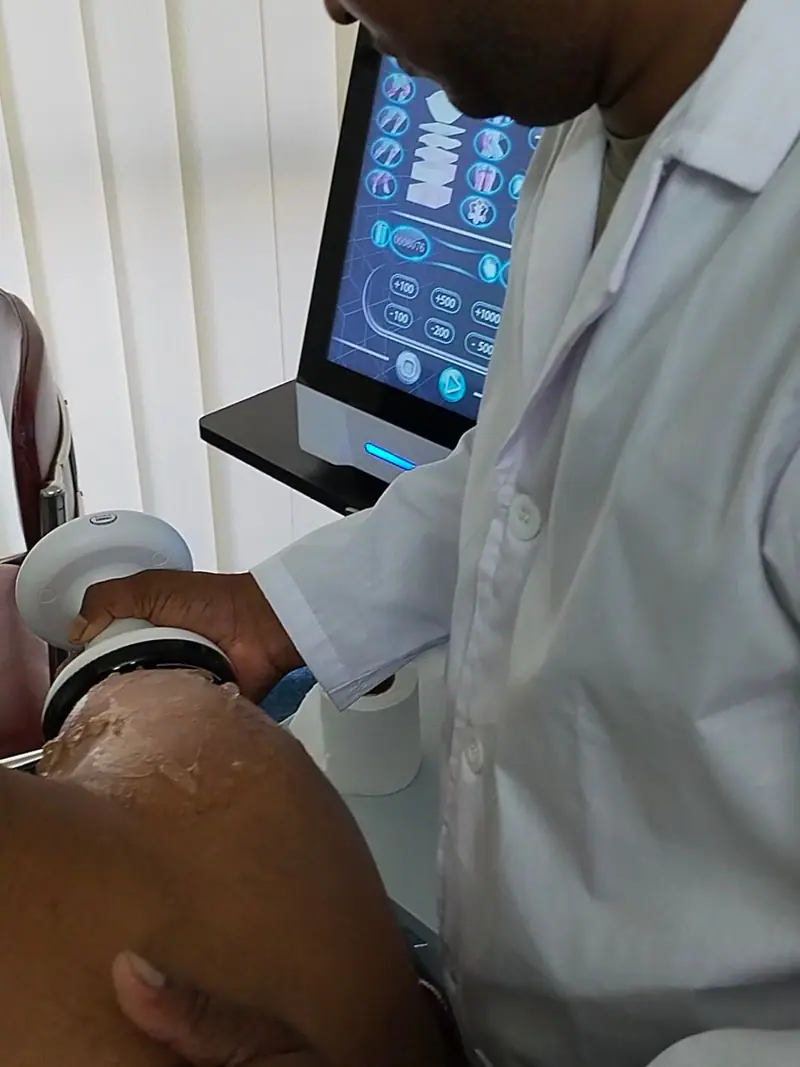
Frozen shoulder is distinctive because the shoulder becomes genuinely unable to move, not merely painful to move. The capsule surrounding the joint thickens and contracts, and the restriction applies whether you move the arm yourself or someone else moves it for you. That last detail is what separates it from most other shoulder problems.
It most often affects people between roughly 40 and 60, is more common in women, and is considerably more common in people with diabetes — a strong association that is worth knowing, since diabetic frozen shoulders tend to be more stubborn and to take longer to resolve.
The three stages
Recognising the stage matters, because the correct treatment differs sharply between them. Aggressive stretching during the painful freezing stage typically inflames the joint further and slows progress, while gentle treatment during the frozen stage under-delivers on the range of motion that could be gained.
- Freezing — pain dominates and worsens, often severe at night and disturbing sleep. Movement gradually reduces. This stage commonly lasts a few months.
- Frozen — pain begins to settle but stiffness is at its worst. Reaching behind the back, overhead or across the body becomes very difficult, and daily tasks such as dressing and grooming are affected.
- Thawing — movement gradually returns over months as the capsule loosens. Recovery is slow but generally continues in the right direction.
Confirming the diagnosis
Assessment tests both active movement, which you perform, and passive movement, which the physiotherapist performs while your arm is relaxed. In frozen shoulder both are restricted in a characteristic pattern, with outward rotation usually the most limited. In rotator cuff problems, by contrast, passive range is often preserved even when active movement is painful.
We also screen for the conditions that mimic it — rotator cuff tears, arthritis of the shoulder joint, calcific tendinitis and referred pain from the neck — because those need different management. Where a history of diabetes or thyroid disease exists, it is relevant and worth mentioning.
Treatment by stage
During the painful stage, treatment prioritises pain relief and maintaining the range you still have: gentle mobilisation within a comfortable range, positioning advice for sleeping, and modification of aggravating activities. Night pain is often the most distressing feature, and specific positioning frequently makes a meaningful difference.
Once the joint becomes less irritable, treatment shifts decisively toward restoring range — sustained joint mobilisation, stretching held long enough to influence the capsule, and progressive strengthening as movement returns. This stage requires consistency; short, frequent daily sessions at home outperform occasional intensive effort.
Throughout, the strength of the rotator cuff and shoulder blade muscles is rebuilt, because a shoulder that has been guarded for months loses considerable strength and control that does not return automatically when the stiffness resolves.
How long it takes
Frozen shoulder is a slow condition, and honesty about that is more useful than optimism. The full natural course commonly runs one to three years, though appropriate physiotherapy generally improves range and function faster and reduces the pain along the way.
Where progress stalls despite consistent treatment, other options exist — including injection or, less commonly, surgical release — and we will discuss when a medical or orthopaedic opinion is worth seeking rather than continuing indefinitely.
Frequently asked questions
How do I know if it is frozen shoulder rather than another shoulder problem?
The distinguishing feature is that movement is restricted even when someone else moves your relaxed arm. In most other shoulder problems, passive range is better preserved than active movement.
Why is the pain so much worse at night?
Night pain is characteristic of the early inflammatory stage, and lying on the affected side compresses the irritated capsule. Specific sleeping positions, often with the arm supported on a pillow, usually help considerably.
Should I push through the pain to stretch it?
Not during the painful freezing stage — aggressive stretching then tends to inflame the joint and slow recovery. Once the joint becomes less irritable, more sustained stretching becomes appropriate and necessary.
Does diabetes affect frozen shoulder?
Yes. Frozen shoulder is considerably more common in people with diabetes, and it often takes longer to resolve. Mention your diabetes at assessment so expectations and the plan can be set realistically.
Will it come back or affect the other shoulder?
Recurrence in the same shoulder is uncommon. The opposite shoulder can be affected at some point, particularly in people with diabetes, so maintaining shoulder mobility and strength afterwards is worthwhile.
Next steps
Ready to start treatment?
Message us on WhatsApp with what is bothering you and when you are free. Tell us if you would prefer a male or female physiotherapist and we will schedule accordingly.
Saturday–Thursday, 9:00 AM – 9:00 PM · Friday — closed