
Service
Pain Management Physiotherapy
Structured assessment and hands-on treatment for persistent back, neck, shoulder and joint pain — with a plan you can keep doing at home.
Separate arrangements for male and female patients
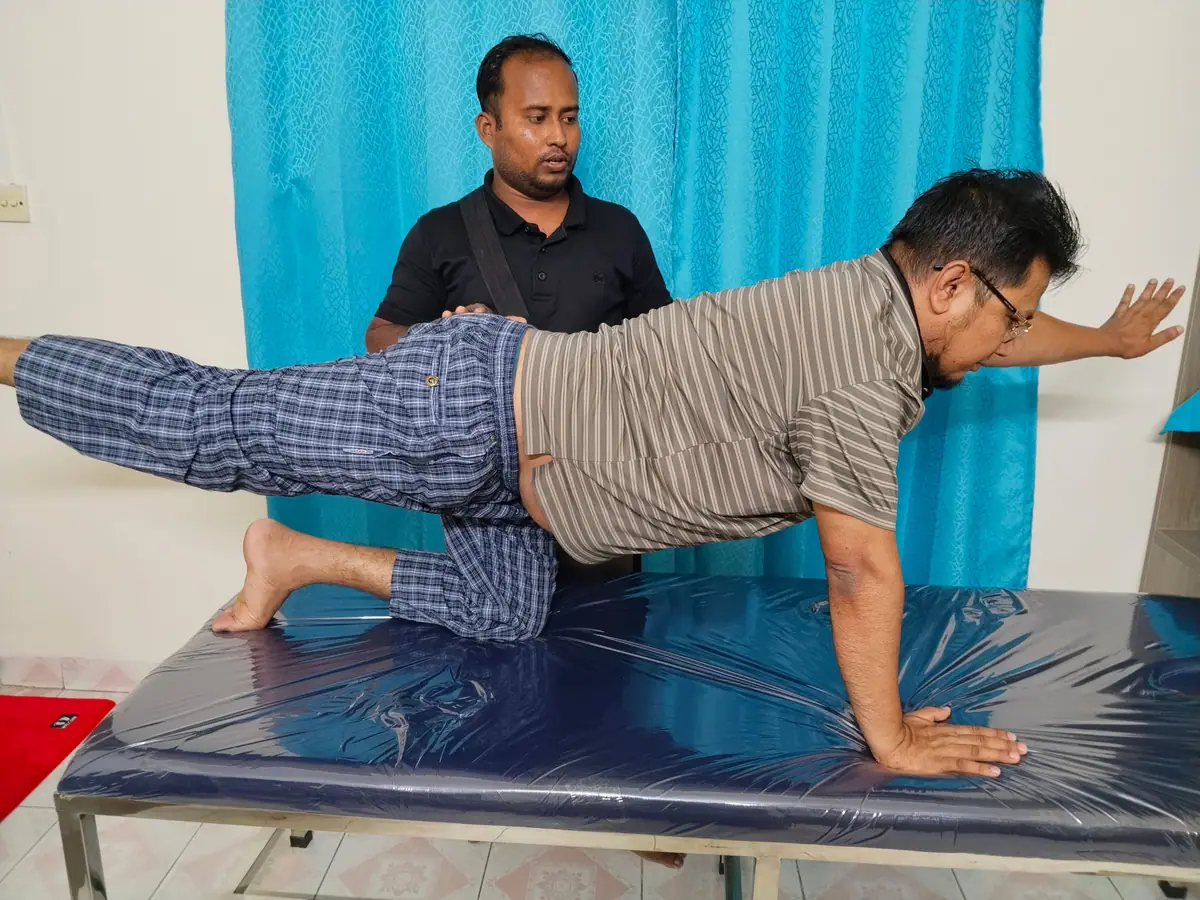
Pain that has lasted more than a few weeks rarely settles with rest alone. By that point the original irritation is often only part of the picture: the muscles around the area have changed how they work, movement has become guarded, and the nervous system has become more sensitive to signals it used to ignore. Treating only the sore spot tends to give short-lived relief.
Pain management physiotherapy at Physio Motion starts with working out what is actually driving your pain, then treating that. Some people need manual therapy to restore movement in a stiff joint. Others need loading and strengthening because the tissue is not coping with what they ask of it. Many need both, plus a clear explanation of why the pain behaves the way it does.
What the first appointment involves
Your first visit is an assessment rather than a rushed treatment. The physiotherapist asks how the problem started, what makes it worse and better, how it affects your sleep and your work, and what you have already tried. That history usually narrows the possibilities considerably before anyone touches you.
The physical examination then looks at how you actually move — how your spine bends, how your hip and shoulder rotate, which movements reproduce your symptoms and which do not, and whether the muscles that should be controlling the area are doing their job. Where it is relevant, strength and nerve tests are included.
At the end you should leave understanding three things: what is most likely causing your pain, what the treatment plan is, and roughly how long it is likely to take. If your presentation suggests something that needs medical investigation rather than physiotherapy, we will tell you that instead of starting treatment.
Treatment approaches we use
No single technique fixes every painful problem, and any clinic that offers only one is limited by that choice. Treatment is selected to match the assessment findings.
- Manual therapy — hands-on mobilisation of stiff joints and soft-tissue work for muscles that have become tight or guarded.
- Therapeutic exercise — graded strengthening and mobility work, progressed as you tolerate more. This is usually what produces lasting change.
- Electrotherapy and thermal modalities — used selectively for pain relief in an irritable stage, alongside active treatment rather than instead of it.
- Postural and ergonomic advice — practical adjustments to how you sit, drive, lift, sleep and use a phone or laptop.
- Education about pain — understanding why pain persists is genuinely treatment, not a consolation prize. It changes how people move and how much they fear movement.
Separate arrangements for male and female patients
Pain assessment often requires examining the lower back, hip, abdomen or shoulder directly, and for many patients in Dhaka that is the single biggest barrier to seeking help at all. Physio Motion maintains separate treatment arrangements for male and female patients, with physiotherapists matched accordingly.
This is not a premium add-on or something to negotiate at the door. It is how the centre is organised. When you book, tell us your preference and we will schedule you with a matched physiotherapist.
How long treatment usually takes
Honest answer: it depends on how long you have had the problem, what is causing it, and how consistently you do the home programme. A recently irritated joint may settle within a few sessions. Pain that has been present for a year, with deconditioning and disturbed sleep on top, takes longer and involves more rebuilding.
What you should expect is a reassessment as you go rather than an open-ended series of appointments. If a plan is working, we progress it. If it is not producing change within a reasonable window, we re-examine and change the approach — or refer you on where that is the right thing to do.
What you can do between sessions
Most of your recovery happens outside the clinic. Home exercises are prescribed in small, specific doses, because a programme of fifteen exercises is a programme nobody completes. Expect a handful of movements with clear instructions on how many, how often, and what a normal amount of discomfort feels like.
Complete rest is rarely the answer for persistent pain. Staying as active as your symptoms reasonably allow, while avoiding the specific movements that flare things up, generally produces better outcomes than stopping everything.
Frequently asked questions
Do I need a doctor’s referral to start physiotherapy?
No. You can contact us directly and book an assessment. If during that assessment we find signs that need a doctor’s opinion or imaging first, we will tell you clearly and explain why.
Will physiotherapy make my pain worse?
Some treatment and exercise produces mild, short-lived soreness, similar to after unfamiliar activity, and that is normal. Sharp or escalating pain is not expected — tell your physiotherapist and the plan will be adjusted.
Can I request a female physiotherapist?
Yes. Physio Motion runs separate treatment arrangements for male and female patients with matched physiotherapists. Mention your preference when you message us and we will schedule accordingly.
How many sessions will I need?
It depends on the diagnosis and how long the problem has been present. Your physiotherapist will give you an estimate after the assessment and reassess as you progress rather than committing you to a fixed package upfront.
Should I bring my scans and reports?
Yes, bring any X-rays, MRI reports, prescriptions or previous treatment notes you have. They add useful context, though the physical assessment usually tells us more about what to treat than the images alone.
Conditions we treat with this service
- Low Back Pain, PLID & Sciatica Back pain, disc prolapse (PLID) and sciatica — assessed properly, then treated with hands-on care and a progressive exercise plan.
- Neck Pain Neck pain, cervical spondylosis, nerve pain into the arm and neck-related headaches — treated with hands-on care plus targeted strengthening.
- Knee Pain Knee osteoarthritis, ligament and meniscus injuries and kneecap pain — assessed to find the cause, then treated with progressive strengthening.
Not sure which applies to you? Get in touch and we will point you in the right direction, or browse all our services .
Ready to start treatment?
Message us on WhatsApp with what is bothering you and when you are free. Tell us if you would prefer a male or female physiotherapist and we will schedule accordingly.
Saturday–Thursday, 9:00 AM – 9:00 PM · Friday — closed