
Condition
Stroke Rehabilitation
Rehabilitation after stroke — rebuilding movement, balance, transfers and walking, with the family trained to continue the work at home.
Treated under Neuro & Stroke Rehab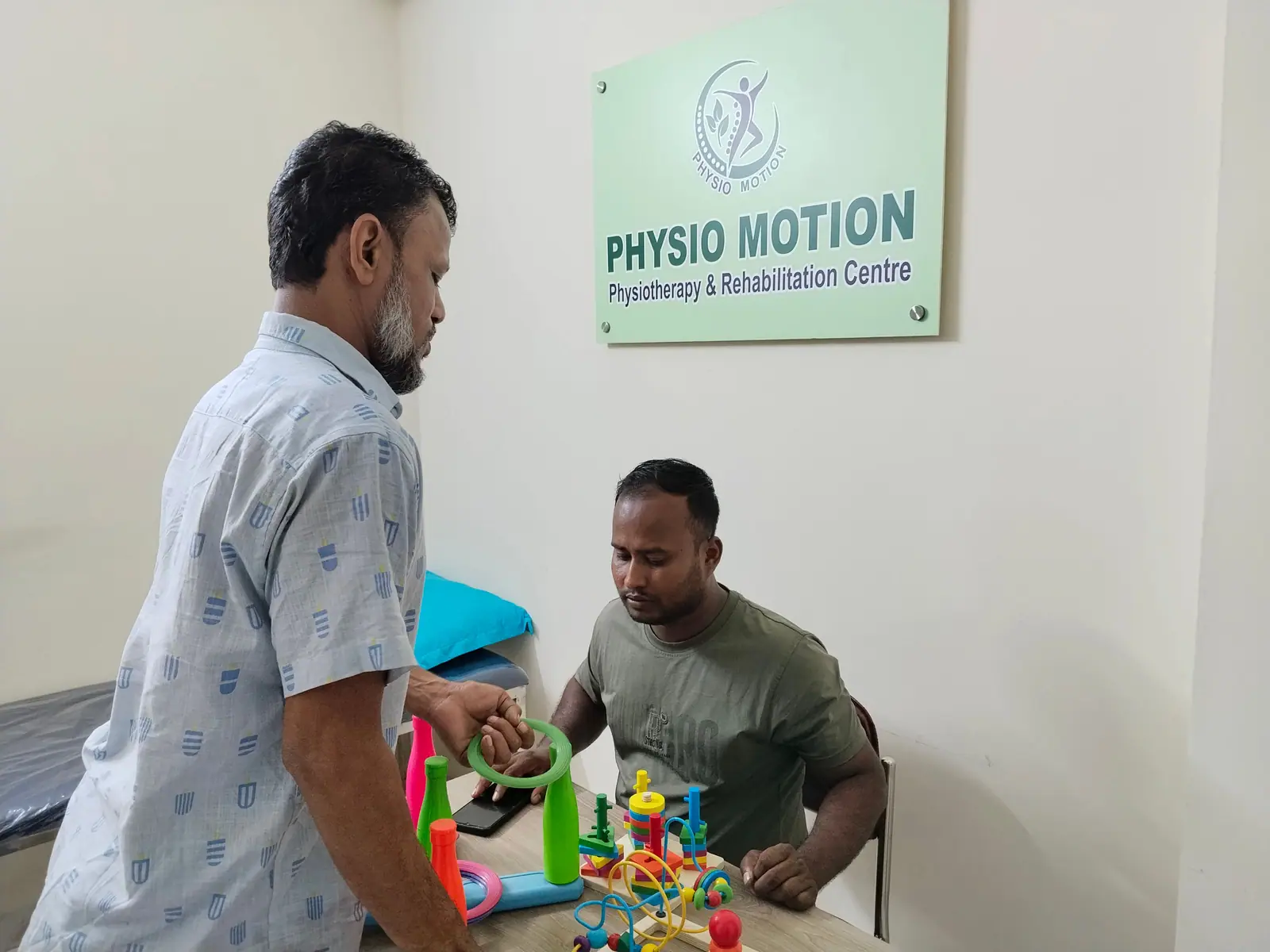
A stroke damages part of the brain, and the movement problems that follow reflect a loss of control rather than a loss of muscle. The nervous system retains a capacity to reorganise, and that reorganisation is driven by repeated, specific, appropriately difficult practice. This is the basis of stroke rehabilitation, and it is why the amount and quality of practice matters so much.
Physio Motion provides stroke rehabilitation focused on the functions that determine independence — moving in bed, sitting up, standing, transferring, balancing and walking — together with practical training for the family members providing daily care.
Problems commonly addressed
- Weakness affecting one side of the body, from mild to complete.
- Increased muscle tone and spasticity, which can restrict movement and cause pain.
- Loss of balance in sitting and standing, and fear of falling.
- Difficulty walking — reduced speed, poor foot clearance, uneven step length, reliance on aids.
- Shoulder pain and subluxation on the affected side, which is common and largely preventable.
- Loss of arm and hand function affecting eating, dressing and grooming.
- Reduced endurance, deconditioning and fatigue.
How rehabilitation is structured
Assessment records a baseline — voluntary control, tone, sensation, sitting and standing balance, and how much assistance each functional task requires. Because gains can be gradual, measuring properly is what allows real progress to be distinguished from a good or bad day.
Treatment is built on task-specific practice. If the goal is standing from a chair unaided, the treatment is practising that movement with precisely the assistance needed, withdrawing it as control improves. Strength work, tone management, stretching to protect joint range and balance retraining support that goal rather than replacing it.
Protecting the affected shoulder is a priority from the start. A weak shoulder that is pulled on during transfers can become painful and stiff, and that pain then obstructs everything else. Correct handling is taught to everyone involved in the patient’s care.
What families should know
In most Bangladeshi households, care after discharge is delivered by the family. Done well, this is a major advantage, because the patient practises far more than any clinic timetable allows. The requirement is that the family knows what to do.
Carers are taught how to assist transfers without pulling on the weak arm, how to position limbs to protect range and skin, how to support walking practice safely, how to set up the home to reduce falls risk, and which exercises to repeat during the day. Attend a session with the patient and ask to be shown directly — it is one of the highest-value things a family can do.
Recovery expectations
Recovery is usually fastest in the first weeks and months, and continues more gradually after that. Meaningful improvement in balance, walking quality, endurance and confidence remains achievable later, including well beyond the first year, which is why "it has been too long" is rarely a good reason not to be assessed.
We will not promise a particular level of recovery, because that depends on the stroke itself and differs between individuals. What we will do is establish where the patient is now, set the next achievable goal, measure against it, and be honest about progress.
Frequently asked questions
When should stroke rehabilitation begin?
Generally as soon as the patient is medically stable, on the treating doctor’s advice. Early rehabilitation helps prevent secondary complications such as joint stiffness, shoulder pain, pressure areas and general deconditioning.
Is it too late to start if the stroke was over a year ago?
No. While early recovery is usually fastest, improvements in balance, walking, strength and confidence are still achievable later. An assessment will establish what is realistic in your case.
Why is the affected shoulder painful?
A weak shoulder is vulnerable to being pulled or poorly supported during transfers, which can cause pain and partial subluxation. Correct handling, positioning and support prevent much of this, and it is taught to carers early.
Can rehabilitation be done at home?
Home visits are available on request for patients who cannot travel, and they are useful for training the family in the actual home environment. Message us on WhatsApp to confirm availability for your area.
How often are sessions needed?
Frequency depends on the stage and the goals, and is set after assessment. Because repetition drives neurological recovery, the home programme carried out by the patient and family is as important as the scheduled sessions.
Next steps
Ready to start treatment?
Message us on WhatsApp with what is bothering you and when you are free. Tell us if you would prefer a male or female physiotherapist and we will schedule accordingly.
Saturday–Thursday, 9:00 AM – 9:00 PM · Friday — closed