
Service
Neurological & Stroke Rehabilitation
Rehabilitation after stroke and for other neurological conditions — retraining movement, balance, transfers and walking, with practical family training.
Separate arrangements for male and female patients
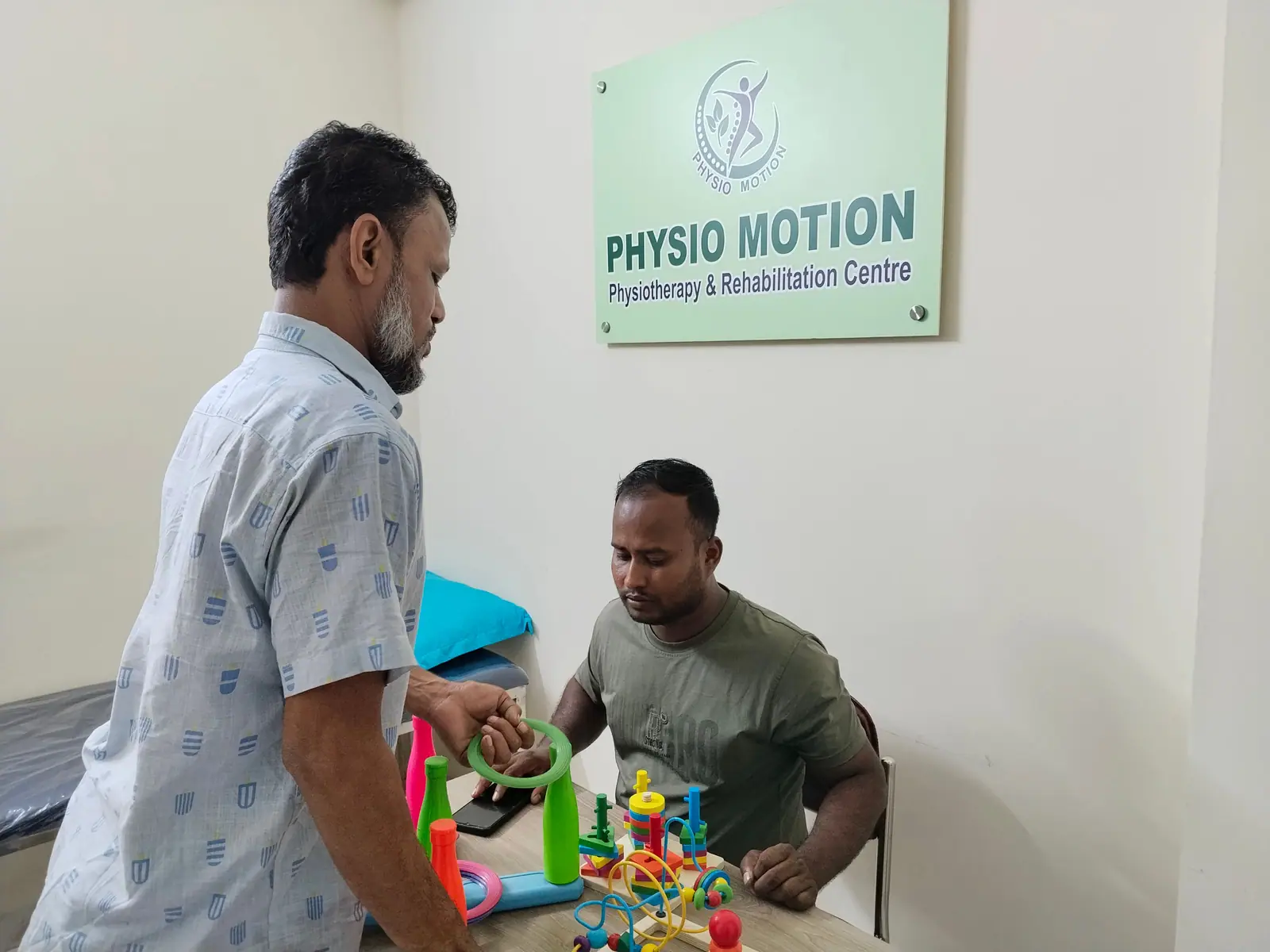
After a stroke or with a neurological condition, the problem is usually not that the muscles have disappeared — it is that the pathways controlling them have been damaged, and the brain has to relearn how to recruit them. That relearning is driven by repeated, specific, progressively harder practice. Neurological physiotherapy is how that practice is structured and supervised.
Physio Motion provides rehabilitation for patients recovering from stroke and living with other neurological conditions, focusing on the everyday functions that determine independence: rolling in bed, sitting up, standing, transferring to a chair or toilet, balancing, and walking.
Conditions this covers
- Stroke — both weakness affecting one side of the body and the balance, coordination and walking problems that follow.
- Post-traumatic brain injury movement and balance rehabilitation.
- Spinal cord injury rehabilitation, including transfer training and wheelchair-level mobility.
- Parkinson’s disease — gait, balance, freezing and posture work.
- Facial palsy, including Bell’s palsy, with facial muscle retraining.
- Peripheral nerve injuries affecting movement in an arm or leg.
- Balance and dizziness problems of neurological origin.
How neurological rehabilitation is structured
Assessment establishes a baseline: muscle tone, voluntary control, sensation, balance in sitting and standing, and how much assistance each functional task currently needs. That baseline matters, because progress in neurological rehabilitation is often gradual and is easy to underestimate without measurement.
Treatment is then built around task-specific practice. If the goal is standing up from a chair independently, the treatment involves practising that transfer with the right amount of assistance, reducing assistance as control improves, rather than only exercising the muscles in isolation. Strength work, tone management, stretching to protect joint range, and balance retraining all support that functional goal.
Repetition volume matters in neurological recovery. Part of the physiotherapist’s job is making sure the practice continues between sessions, which is why family training is built into the programme rather than treated as an afterthought.
Training for families and carers
In Bangladesh most stroke care after discharge happens at home, delivered by family members who were given very little instruction. Handled well, that is a genuine advantage — the patient gets far more practice than any clinic schedule could provide. Handled badly, it leads to painful shoulders, falls, and carers with back injuries.
We teach the people doing the daily care how to help safely: how to assist a transfer without pulling on a weak shoulder, how to position limbs to protect joint range, how to support walking practice, and which exercises to repeat during the day. Attend a session with the patient and ask to be shown directly.
Timing and expectations
Rehabilitation generally starts as soon as the patient is medically stable — earlier involvement gives better opportunity to prevent secondary problems such as joint contracture, shoulder pain and deconditioning. Recovery is usually fastest in the first months and then continues more gradually, and meaningful functional gains can still be achieved later, particularly in balance, walking quality and confidence.
We will not tell you that a specific level of recovery is guaranteed, because that depends on the injury and varies between individuals. What we will do is measure where you are, set the next achievable goal, and be straightforward about progress.
Frequently asked questions
How soon after a stroke should physiotherapy begin?
Generally as soon as the patient is medically stable, on the advice of the treating doctor. Early rehabilitation helps prevent secondary problems such as joint stiffness, shoulder pain and loss of general condition.
Is recovery still possible months or years after a stroke?
Improvement is typically fastest in the early months, but gains in balance, walking quality, strength and confidence are still achievable later. Assessment will tell you what is realistic in your specific case.
Can family members be taught to help at home?
Yes, and we encourage it. Carers can be shown safe transfer technique, correct positioning, and which exercises to repeat during the day. Attend a session with the patient and ask to be trained directly.
Do you treat conditions other than stroke?
Yes. This service also covers Parkinson’s disease, traumatic brain injury, spinal cord injury, facial palsy including Bell’s palsy, and peripheral nerve injuries affecting movement.
Is home-based neurological physiotherapy available?
Home visits are available on request for patients who cannot travel easily. Message us on WhatsApp to confirm availability for your area and schedule.
Conditions we treat with this service
- Stroke Rehabilitation Rehabilitation after stroke — rebuilding movement, balance, transfers and walking, with the family trained to continue the work at home.
- Vertigo & Dizziness Positional vertigo (BPPV) assessed and treated with repositioning manoeuvres, plus balance retraining for persistent dizziness and unsteadiness.
Not sure which applies to you? Get in touch and we will point you in the right direction, or browse all our services .
Ready to start treatment?
Message us on WhatsApp with what is bothering you and when you are free. Tell us if you would prefer a male or female physiotherapist and we will schedule accordingly.
Saturday–Thursday, 9:00 AM – 9:00 PM · Friday — closed