
Condition
Low Back Pain, PLID & Sciatica
Back pain, disc prolapse (PLID) and sciatica — assessed properly, then treated with hands-on care and a progressive exercise plan.
Treated under Pain Management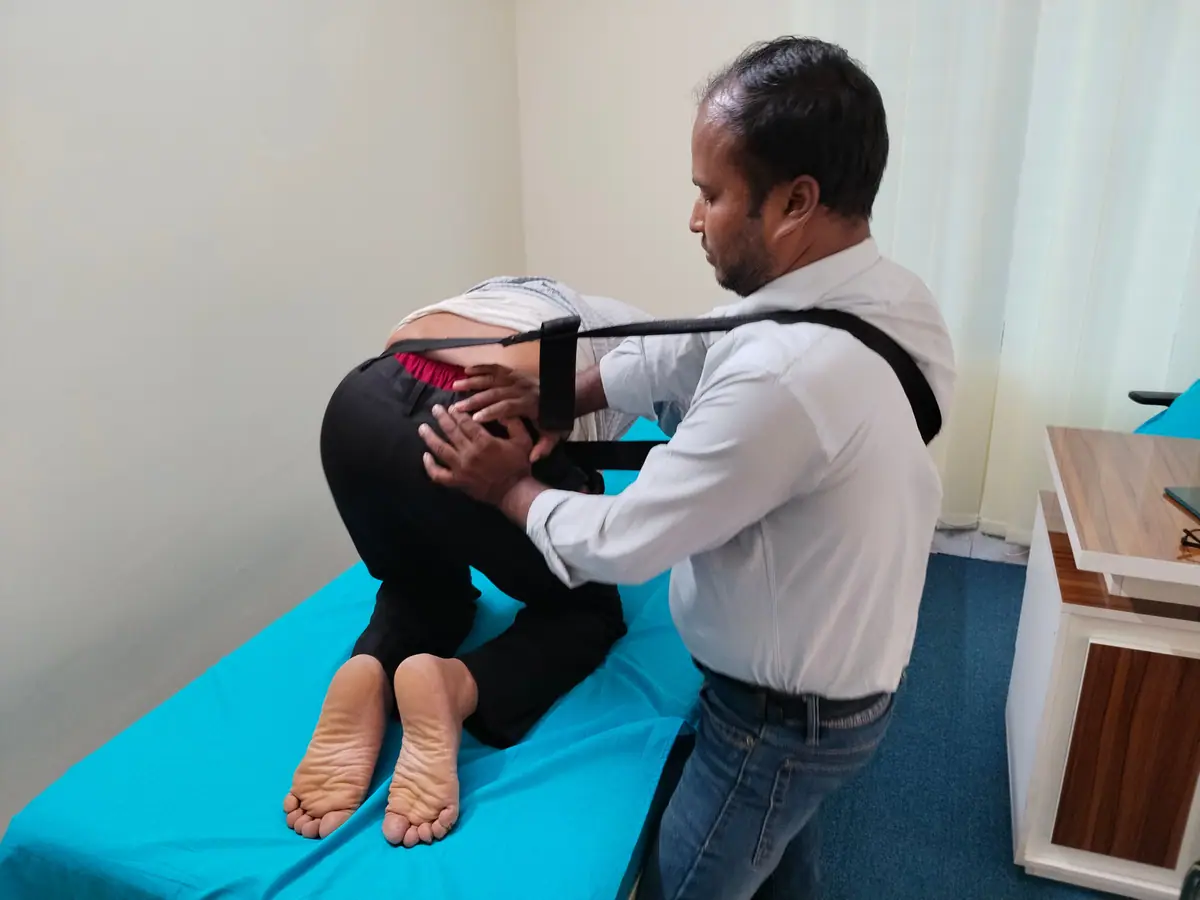
Low back pain is the most common problem seen in physiotherapy clinics, and one of the most commonly mismanaged. In Bangladesh it is frequently labelled PLID — prolapsed lumbar intervertebral disc — often on the basis of an MRI report rather than a physical examination. That matters, because disc bulges are extremely common in people with no pain at all, and treating an image instead of a person leads to the wrong plan.
Sciatica is not a diagnosis either; it is a description of pain travelling down the leg along the sciatic nerve. It can come from a disc pressing on a nerve root, from narrowing of the spinal canal, from the joints at the back of the spine, or from muscular structures irritating the nerve on its way down. Each of those needs a somewhat different approach.
What the pain pattern usually tells us
The assessment tests these possibilities directly — how your spine moves, which movements reproduce and which relieve your symptoms, plus nerve tension, reflex, sensation and strength testing where the leg is involved.
- Pain mainly in the back, worse bending forward or sitting for long periods, often disc-related in origin.
- Pain travelling below the knee with numbness, pins and needles or weakness, suggesting nerve root involvement.
- Back pain worse with standing and walking, easier when sitting or leaning forward, which can point to canal narrowing.
- Pain concentrated on one side of the lower back, worse leaning backwards or twisting, often from the facet joints.
- Pain across the belt line and buttock, worse standing on one leg or turning in bed, often sacroiliac in origin.
Do you need an MRI?
Often not. Imaging is genuinely important when there are signs of significant nerve compression, when symptoms fail to improve as expected, or when there are red flags suggesting something other than mechanical back pain. Outside those situations, an MRI frequently finds age-related changes that are present in plenty of pain-free people, and being told you have a "damaged" spine can itself make recovery harder.
If you already have imaging, bring it. It is useful context. It just should not be the only thing determining your treatment.
How low back pain is treated
Early treatment aims to reduce pain enough to let you move more normally: manual therapy for stiff segments, soft-tissue work, positions and movements that centralise your symptoms, and clear advice on which activities to modify temporarily. Where tight gluteal or paraspinal trigger points are adding to the pain, dry needling may be used at this stage for the same reason. Bed rest is not recommended — prolonged rest generally slows recovery.
The main work is progressive exercise. That means restoring movement in the spine and hips, then building endurance and strength in the muscles that control your trunk, then reintroducing the things that currently provoke symptoms — bending, lifting, sitting for longer, prayer positions — in a graded way, so your back becomes tolerant of them again rather than permanently avoiding them.
Nerve-related leg pain often improves in a predictable sequence: the leg pain retreats upward toward the back before it disappears, even while the back itself is still sore. That pattern is a good sign and worth knowing about, because otherwise it can feel like nothing is improving.
Warning signs that need medical attention
Most back pain is mechanical and safe to treat with physiotherapy. A small number of presentations need urgent medical review instead. Seek medical care promptly if you experience:
- Numbness in the saddle region — the inner thighs, buttocks or genital area.
- Loss of bladder or bowel control, or difficulty passing urine.
- Progressive weakness in one or both legs rather than pain alone.
- Back pain with fever, unexplained weight loss, or a history of cancer.
- Severe pain following significant trauma such as a fall or road accident.
Preventing recurrence
Back pain has a strong tendency to return, and the most effective protection is maintained strength and continued activity rather than permanent caution. People who stop exercising once the pain settles tend to be the ones back in the clinic within the year.
Practical measures help too: breaking up long sitting, setting up your workstation so your screen is at eye level, lifting with the load close to your body, and keeping general activity levels up. None of these replace strength, but together they reduce the load your back is being asked to absorb.
Frequently asked questions
Can physiotherapy treat PLID without surgery?
Most disc-related back and leg pain improves without surgery. Physiotherapy addresses movement, strength and nerve irritation, and surgery is generally reserved for significant or progressive nerve compression, or symptoms that do not respond to appropriate conservative care.
Should I rest completely when my back hurts?
No. Prolonged bed rest tends to slow recovery. Staying as active as your symptoms reasonably allow, while temporarily modifying the specific activities that flare things up, generally produces better outcomes.
Why does my leg hurt more than my back?
That usually indicates a nerve root is being irritated or compressed, which typically produces symptoms further from the spine than the source. As it settles, leg pain often retreats upward toward the back before resolving.
How long does sciatica take to settle?
Many cases improve substantially over several weeks with appropriate treatment, though it varies with the cause and severity. Your physiotherapist will give an estimate after assessment and reassess as you progress.
Is it safe to pray and sit on the floor with back pain?
Usually yes, sometimes with temporary modification during the painful stage. Restoring these positions comfortably is treated as a rehabilitation goal rather than something to give up permanently.
Next steps
Ready to start treatment?
Message us on WhatsApp with what is bothering you and when you are free. Tell us if you would prefer a male or female physiotherapist and we will schedule accordingly.
Saturday–Thursday, 9:00 AM – 9:00 PM · Friday — closed