
Condition
Neck Pain & Cervical Spondylosis
Neck pain, cervical spondylosis, nerve pain into the arm and neck-related headaches — treated with hands-on care plus targeted strengthening.
Treated under Pain Management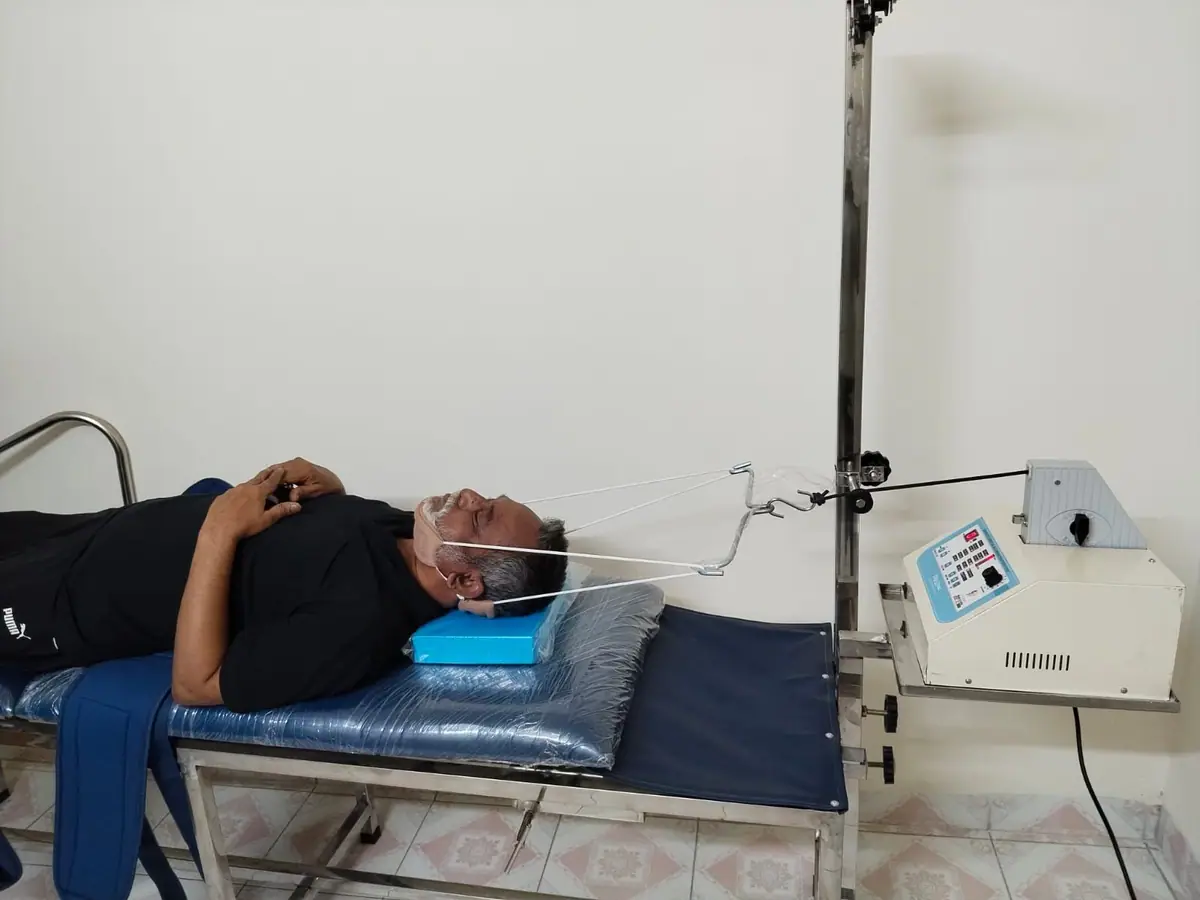
Neck pain has become substantially more common with the amount of time spent looking down at phones and laptops. The neck holds the head — around five kilograms — and every degree of forward tilt increases the load the neck muscles must resist. Hold that position for hours daily and the tissues respond predictably.
Cervical spondylosis is the term for age-related changes in the neck joints and discs. It appears on the majority of scans past middle age, including in people with no symptoms at all, so it is better understood as a normal finding that may or may not relate to your pain rather than as a diagnosis in itself.
Common presentations
- Stiffness and restricted movement, especially turning the head to check a blind spot or reverse a car.
- One-sided neck pain spreading into the shoulder blade or upper back.
- Headaches starting at the base of the skull and radiating forward — cervicogenic headache.
- Pain, pins and needles or numbness travelling into the arm or hand, suggesting nerve root irritation.
- Waking with a locked, painful neck (acute torticollis or wry neck).
- Aching that builds through a working day and eases overnight, typically postural in origin.
How neck pain is assessed
Assessment examines how far and how comfortably your neck moves in each direction, which movements reproduce your symptoms, the condition of the muscles supporting the neck and shoulder blade, and how your upper back and shoulders contribute — a stiff upper back forces the neck to compensate constantly.
Where symptoms travel into the arm, neurological testing checks sensation, strength and reflexes to establish whether a nerve root is involved and which one. Headaches are examined specifically, since neck-related headaches can usually be reproduced and eased by treating the upper neck segments.
Treatment
Manual therapy — joint mobilisation and soft-tissue treatment — is effective for restoring movement and reducing pain in the irritable stage. It works well as an entry point but does not, on its own, prevent recurrence. Where a distinct trigger point in the upper trapezius or levator scapulae is reproducing your pain, dry needling can release it enough to make the strengthening work possible sooner.
The lasting change comes from strengthening. The deep neck flexors and the muscles controlling the shoulder blade are typically weak and poorly coordinated in people with persistent neck pain, and training them is well supported by evidence. Exercises are simple, low in volume and designed to be done at a desk or at home.
Where nerve symptoms are present, treatment also includes techniques to reduce nerve irritation and restore the nerve’s ability to glide freely, progressed carefully so as not to provoke symptoms.
Fixing the daily setup
- Raise your screen so the top of it sits at roughly eye level; laptop users benefit most from a stand and a separate keyboard.
- Bring your phone up toward your face rather than dropping your head toward it.
- Take a movement break roughly every 30–40 minutes — brief and frequent beats long and occasional.
- Use one supportive pillow that keeps your neck level with your spine; stacked pillows push the neck into a sustained bend all night.
- Avoid sleeping on your front, which requires the neck to stay rotated for hours.
- Support your forearms when working, so the neck and shoulder muscles are not holding your arms up all day.
Frequently asked questions
Is cervical spondylosis on my report a serious diagnosis?
It describes age-related changes in the neck that are present in most people past middle age, including many with no symptoms. It is relevant context, but your examination findings determine treatment far more than the report does.
Can neck problems cause headaches?
Yes. Cervicogenic headache typically starts at the base of the skull and spreads forward, often on one side, and it can usually be reproduced and eased by treating the upper neck joints.
Why do I have pins and needles in my hand?
That often indicates irritation of a nerve root in the neck, though it can also come from nerve compression at the elbow or wrist. Neurological testing during assessment distinguishes between these.
Will a cervical collar help?
Collars are occasionally useful very briefly after trauma, but prolonged use weakens the supporting muscles and tends to prolong the problem. Active treatment is preferred in almost all cases.
What pillow should I use?
One that keeps your neck in line with your spine — usually a single supportive pillow for back sleepers and a slightly thicker one for side sleepers. The specific brand matters much less than the resulting alignment.
Next steps
Ready to start treatment?
Message us on WhatsApp with what is bothering you and when you are free. Tell us if you would prefer a male or female physiotherapist and we will schedule accordingly.
Saturday–Thursday, 9:00 AM – 9:00 PM · Friday — closed